
The Compass Left Solution Lifecycle
PHASE TWO


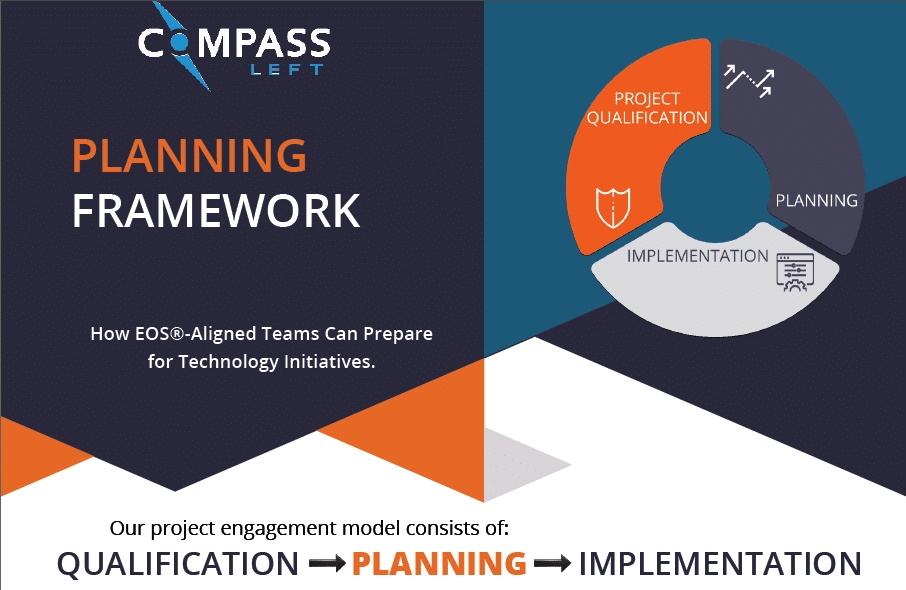
Our Solution in Three Phases
We greatly appreciate working with EOS Implementers and their client organizations because EOS signifies a commitment to making meaningful improvements.
When we engage with an organization through an Implementer, we understand the importance of working within the EOS framework and strive to support and enhance the Implementer’s efforts.
THREE PHASES:
1-QUALIFICATION
2-PLANNING
3-IMPLEMENTATION
This video walks you through Phase Two of our Solution Lifecycle.
Before we begin a project we must take stock, across the board, to ensure that the resources required are available, the management team is fully committed, and the collective team understands the project drivers.

PHASE TWO: PLANNING
The Planning Phase is underscored by the importance of conducting a current state analysis, which serves as a foundational step in effective project planning. Business leaders often neglect this crucial phase, impacting alignment on the enterprise’s present operational status and existing challenges.
This phase begins with the current state, which involves mapping process flows and identifying inefficiencies rather than envisioning a future state. By achieving a comprehensive grasp of the present circumstances, stakeholders can align effectively, thus setting the groundwork for meaningful improvements in the organization.

A significant concern identified during the current state analysis pertains to the prevalence of departmental silos. These silos create barriers that result in gaps within organizational workflows, often unbeknownst to management, yet they have profound implications for overall efficiency. Infante articulates how these disconnects in interdepartmental communications can exacerbate issues, leading to compounding inefficiencies over time. Handoffs between departments are particularly vulnerable to miscommunication, delays, and errors, illustrating the importance of addressing these gaps to foster smooth transitions and enhance collaboration.
By dismantling these operational silos and addressing handoff inefficiencies, organizations can develop a unified understanding of their processes and move toward a more integrated operational structure, ultimately facilitating future improvements.

The desired future state: A critical step requires organizations to prioritize identified process and system issues based on their business impact. Addressing the most critical issues first ensures resources are allocated effectively and that efforts are concentrated where they can yield the greatest benefit. Moreover, after prioritization, organizations must articulate detailed system and process requirements needed to attain the desired future state. This process is essential for aligning changes with strategic business objectives and addressing existing shortcomings identified during the current state analysis.

Solution Research
With a clear vision of the desired future state in place, organizations are tasked with researching potential solutions and vendors that can meet their specified requirements. Infante outlines the importance of leveraging industry insights, exploring available solutions, and considering emerging technologies and best practices that resonate with future state objectives. Engaging with industry peers and reviewing case studies can offer valuable perspectives on successful implementations, guiding the selection of potential vendors. Preliminary evaluations of vendor capabilities are crucial during this stage, taking into account their experience, scalability, and support services.
This approach lays the groundwork for developing informed criteria for vendor selection and requests for proposals (RFPs), facilitating an effective partnership that enhances the organization’s strategic goals and operational performance.
To sum it up…
This is a thorough exploration of the planning stage within the Compass Left Solution Lifecycle. For all of our projects we complete a current state analysis, addressing organizational silos, defining the desired future state, and conducting diligent solution research offer a comprehensive framework for organizations aiming to navigate their transformation processes effectively.
CLICK THIS IMAGE TO DOWNLOAD OUR FRAMEWORK

Compass Left
We are dedicated to providing expert business technology management services and offer unparalleled independence. Our focus is to understand your business, apply our knowledge, experience and relationships to ensure the most efficient alignment between technology and your business objectives. Offering executive-level expertise, we engage across all business dimensions, from HR to finance and operations, to ensure technology serves as a backbone for your strategic objectives.


