Why Tech Projects Fail
How Lead-to-Cash Operations Impact Technology Project Success
JOE INFANTE

What do we mean by ‘lead-to-cash’ (L2C) operations? In essence, L2C refers to the entire journey a business undergoes—from identifying and engaging new prospects, delivering goods and services, billing and collecting payments, to paying vendors and ultimately realizing profit. This cycle interweaves how an organization’s systems, people, and processes function across different departments.
For effective technology planning and implementation, it’s critical to map out this end-to-end process so executives and key managers can reference a single, high-level view—ensuring everyone agrees on how the organization truly operates from lead to cash.

This alignment is more than procedural formality; it directly impacts the success of technology projects. Why does this matter for everyone—from operations to sales? Consider the following business challenges that many organizations encounter:
- Multiple systems appear to perform similar or overlapping functions.
- Departments duplicate efforts, often relying on manual interventions to bridge process gaps.
- Ownership for system support and problem resolution is cloudy, leading to confusion and finger-pointing.
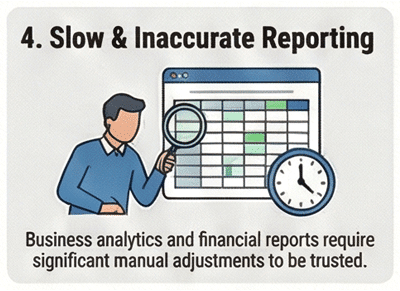
- Business analytics and financial reporting are slow or require significant manual adjustments to ensure accuracy.
- Teams frequently adopt unauthorized apps or “shadow IT” solutions, creating security risks and impacting technology budgets.



These recurring problems are often symptoms of misalignment in how various departments and leaders perceive and manage L2C operations. If leaders lack a common reference point, technology projects risk being driven by the loudest voice or the most motivated manager, rather than by integrated business needs.
CASE STUDY
For example, imagine the director of sales pushing for a new CRM because she finds the existing system lacking specific features. She researches alternatives, arranges vendor demos, and invites the executive team and the marketing director. The CEO delegates the decision, trusting others’ feedback, while the marketing director declines to engage—content with his existing tools and sees no reason to change.

This scenario illustrates a common dynamic: one department’s project champion defines the narrative and requirements, while others remain uninvolved or disengaged, either due to lack of subject expertise or perceived irrelevance to their function. As a result, critical factors such as true organizational fit, integration, cost, and operational impact may be overlooked.

THE SOLUTION
To avoid these pitfalls, organizations should adopt a structured approach where each department documents its workflows:
- How work enters the department
- How work is processed, specifying the people and systems involved
- Noting any manual or inefficient steps
- How work is handed off to the next department(s)
These departmental workflows should be synthesized into an executive summary document, providing leadership with a consolidated, high-level view of lead-to-cash operations. The benefit is twofold: departmental documents help teams understand their own processes and responsibilities at a glance, while the executive summary ensures all key stakeholders share a consistent, organization-wide perspective.
Using our example above with an organization that has defined their L2C operations. The executive team would already have a high level understanding of the sales team CRM system and its shortcomings. The sales director’s request needs to be more objective and focus on the defined inefficiencies, as understood by the executive team and key managers.
When management possesses this unified L2C understanding, decisions about technology projects become more holistic, objective, and aligned with business strategy. This collaborative foundation enhances requirements gathering, reduces redundant solutions, clarifies ownership, and ultimately increases the success rate and business value of IT initiatives.

Compass Left
We are dedicated to providing expert business technology management services and offer unparalleled independence. Our focus is to understand your business, apply our knowledge, experience and relationships to ensure the most efficient alignment between technology and your business objectives. Offering executive-level expertise, we engage across all business dimensions, from HR to finance and operations, to ensure technology serves as a backbone for your strategic objectives.